![[BRAND] Logo](/hg-logo-white.svg)
98% of Manufacturers Are Transforming
What's Stopping the Other 2%?
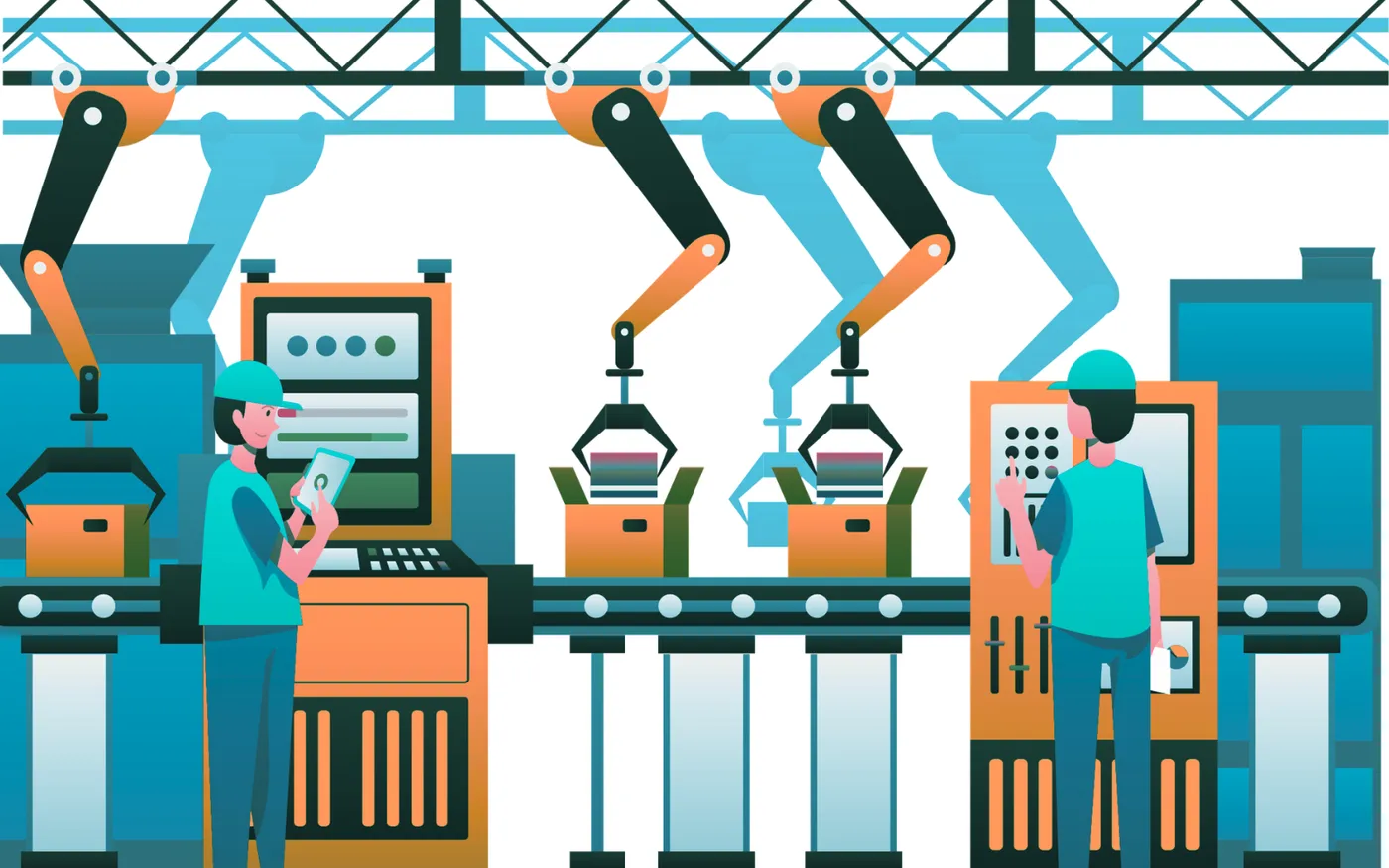
Nearly every manufacturer you compete with is somewhere on the road to digital transformation right now. New ERP, new shop floor tools, new ways of connecting finance to production. It's not a trend anymore. It's the baseline.
So the real question isn't whether you should transform. That decision got made for you the moment your competitors started. The question is whether you're building something that actually holds up or just scrambling to look busy while the ground shifts under you.
Moving Isn't the Same as Arriving
Plenty of manufacturers will tell you they're "in transformation." They bought a new module and ran a pilot. They hired a consultant for a workshop. All of that counts as motion, but motion isn't progress if it doesn't add up to anything.
Real transformation means your finance data, your supply chain and your shop floor all speak the same language in real time, and a plant manager and a CFO can look at the same numbers and agree on what they mean. Many companies chase individual upgrades without ever connecting them and they end up with a faster version of the same fragmented mess they started with. They just paid more for it.
That's the trap. You can spend a fortune on transformation and still be standing still, because you fixed the pieces instead of the system.
What the Other 2% Look Like
We're not talking about laggards who never bought new software. We've met plenty of manufacturers running spreadsheets held together by tribal knowledge and one employee who "just knows how it works." That's a real risk, and it's shrinking fast as that employee gets closer to retirement every year.
But the more common version of the other 2% isn't the manufacturer who did nothing. It's the one who did something, declared victory and stopped. They implemented an ERP a decade ago and never touched it again. They added Power BI dashboards on top of data nobody trusts. They've got a Frankenstein stack of point solutions that technically work but don't talk to each other.
These companies aren't behind because they lack ambition. They're behind because they mistook activity for a finished job.
The Crucial Foundation Question
Here's what separates manufacturers who are genuinely transforming from the ones just keeping up: are you building a foundation or are you patching whatever's already there?
A foundation means one platform for finance and supply chain that gives you a single version of the truth. It means Business Central or D365 Finance and Supply Chain Management set up to reflect how your plant actually runs, not a generic template nobody bothered to configure. It means your shop floor data feeds decisions instead of sitting in a report nobody opens until month end.
Patching means adding another app, another spreadsheet, another workaround every time something breaks. Each patch feels like progress in the moment. Add them up over five years and you've built a system so tangled that nobody fully understands it and everybody's afraid to touch it.
The manufacturers who are winning right now aren't the ones with the most software. They're the ones who can actually see their business, end to end, without waiting three days for someone to pull a report together.
Why This Matters More in Manufacturing Than Anywhere Else
Manufacturing runs on thin margins and tight timing. A late shipment, a stockout, a production line that doesn't know demand shifted last week: these aren't abstract risks. They show up directly in your bottom line and your customer relationships.
When your ERP, supply chain and shop floor data are actually connected, you catch problems before they become expensive. You see a material shortage coming before it stalls the line, and you know your true margin on a product before you've shipped a thousand units at a loss. You forecast demand based on what's actually happening, not what happened last quarter, so a demand shift shows up on your radar in days instead of getting buried until the next planning cycle.
Disconnected systems don't just slow you down. They hide the truth from the people who need to see it fastest.
Think about how many decisions in a typical manufacturing week depend on someone trusting a number they can't fully verify. A purchasing manager reorders raw material based on a forecast that's two weeks stale. A plant supervisor commits to a delivery date without knowing another line just went down. A CFO reports margin to the board using figures that don't yet reflect last week's freight cost spike. None of these people are bad at their jobs, they're just working with the information their systems gave them and their systems didn't give them enough.
Where Hoalani Fits Into This
Hoalani Group builds D365 environments specifically for manufacturers, not generic templates dressed up to look custom. We have collectively spent decades watching manufacturers make the same mistake: buying the software and skipping the hard part of actually connecting it to how they work.
We work across the US, Spain, Portugal, Ghana and Canada and we've seen this pattern hold true everywhere. It's not a regional problem. It's a discipline problem. The manufacturers pulling ahead treat their ERP as the backbone of the business, not a finance department tool that occasionally gets mentioned in an ops meeting.
Which Side Are You On?
If you're reading this thinking your transformation is further along than most, ask yourself one honest question: can your finance team, your plant floor and your supply chain planners all look at the same dashboard right now and agree on what it says? If the answer is no, you might be closer to that other 2% than you'd like to admit, and that's a more common spot to be in than most executives will say out loud.
Transformation isn't a project you finish and file away. It's a foundation you keep building upon. The manufacturers who get this right aren't the ones with the biggest budgets. They're the ones who stopped patching and started building something whole.
If you want an honest look at where your systems actually stand, we're happy to give you one. Visit https://www.hoalani.com or reach out at info@hoalani.com.