
Stop Patching the Bridge. It's Time to Build a New One.
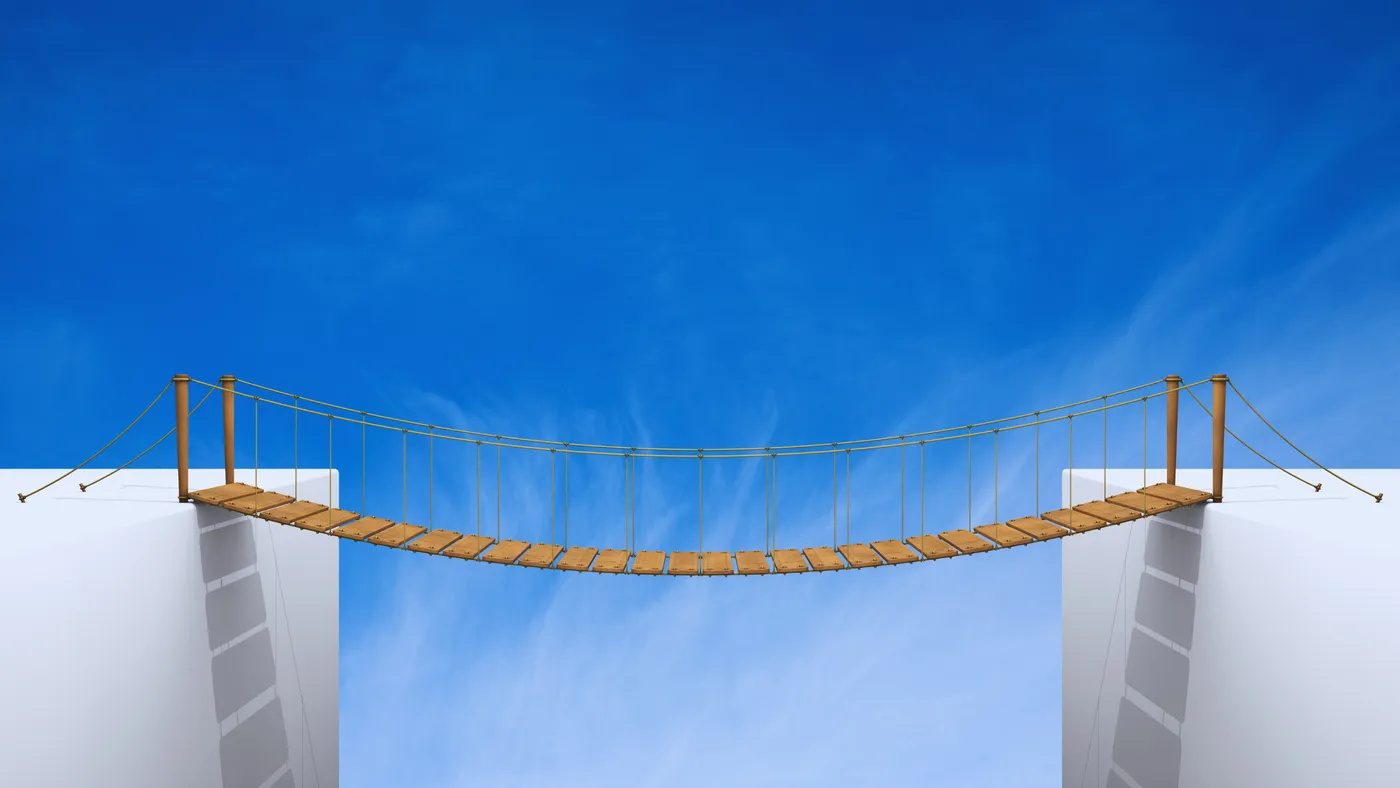
There is a bridge in your city. You have driven over it a thousand times. One day, the city puts up orange cones and a "Repair in Progress" sign. Six months later, the cones are still there. New cracks. New patches. New signs. The repairs never end because the bridge was never the problem to be solved. It was the problem to be replaced.
Your legacy ERP is that bridge.
You know it. Your IT team knows it. The consultants who have been patching it for fifteen years definitely know it. But every year, the decision gets deferred. The budget goes elsewhere. The risk of change feels bigger than the cost of staying put.
It isn't. And it never was.
The Patches Are Not Working. They Are Just Expensive.
Let's be honest about what "maintaining" an aging enterprise system actually looks like. It looks like a patchwork of workarounds that nobody fully understands. It looks like tribal knowledge held by two or three people who have been around long enough to remember why things are done a certain way. It looks like custom code that was written a decade ago and breaks every time the vendor releases an update.
It also looks like a budget line that keeps growing while the return keeps shrinking.
Every patch buys you a little more time. But time is not the same thing as stability. Time is not the same thing as capability. And time is absolutely not the same thing as competitive advantage. You are paying, repeatedly, to stand still.
The CIOs and CTOs who keep patching are not doing it because they think it is a good idea. They are doing it because the conversation about replacement has never been framed correctly. It has always been presented as a massive, terrifying, multi-year project that will consume the entire organization and may or may not work in the end.
That framing is outdated. And it is costing you.
What Modernization Actually Looks Like Today
Microsoft Dynamics 365 is not what ERP looked like ten years ago. It is not a monolithic installation that requires a dedicated server room and a team of specialists to keep it breathing. It is a cloud-based, modular platform that can be implemented in stages, scaled at pace and connected to the tools your business already uses.
That matters because one of the biggest objections to ERP modernization is "we can't afford to rip and replace everything at once." With D365, you don't have to. You can start with finance. Or supply chain, or operations. You can connect Business Central to your existing infrastructure without burning the whole organization down first.
Hoalani Group has been doing this for a long time. Our founder, Jesper Kehlet, was part of the original development team for Axapta, the product that became Microsoft Dynamics. We have seen every version of this platform. We understand, at a structural level, what D365 can do and what it cannot. We have also seen what happens to companies that wait too long to make the move.
The pattern is the same every time. A company patches for years. A competitor modernizes. The gap widens. Then it becomes a crisis.
The Real Risk Is Not the Upgrade
What nobody says out loud in the boardroom? Staying on a legacy system is not the safe choice. It feels safe. It looks safe on the quarterly budget review. But it is not safe.
When your systems can't give you real-time data, your decisions are based on old information. When your systems can't integrate with modern tools, your teams are doing manual work that should be automated. When your systems can't scale, your growth is capped by your infrastructure. These are not hypothetical risks. They are operational realities that show up every day in the work your people do.
A CTO who thinks the risk of modernization is higher than the risk of staying put has not fully priced the cost of staying put. Data breaches are more common on older, unpatched systems. Vendor support for aging platforms eventually disappears. Talented employees leave organizations that make them work with outdated tools. These things have price tags. They are just harder to put on a slide deck.
New Bridge. Solid Foundation.
Here is what a modern D365 environment actually gives you. Real-time visibility into your financials, your operations and your supply chain. A single source of truth that your leadership team can actually trust. Automation that removes the manual work that is burning out your best people. Integration with the Microsoft ecosystem your organization already lives in, including Teams, Power BI, SharePoint and Power Automate.
It also gives you something harder to quantify but just as important: the ability to adapt. When the market shifts, and it will, a modern ERP platform lets you respond. You can add capabilities. You can expand into new markets. You can onboard new entities without building another patchwork system from scratch.
Hoalani operates across seven countries on a single connected platform. We are not talking about something theoretical. We are talking about something we live every day. When a client in the United States needs support, our team in Spain or Portugal or Ghana can pick it up. That is what a modern, connected infrastructure enables. It is not magic, it's architecture.
You Already Know What You Need to Do
You've read this far. That means you already know the conversation needs to happen. Maybe it's been delayed by budget cycles, by competing priorities, by the sheer weight of organizational inertia. All of that is real and none of it goes away.
But the bridge is not getting stronger while you wait.
The question is not whether to modernize. The question is when, and with whom. The right partner does not just hand you software and wish you luck. The right partner understands your industry, your processes and the specific reasons your current system is failing you. Then they help you build something that actually works.
That is what Hoalani Group does. No chaos. No shortcuts. No pretending that ERP modernization is simple when it isn't. Just honest, experienced guidance from a team that has been doing this longer than most.
If your systems are holding your business back, let's talk. Visit www.hoalani.com or reach out directly at info@hoalani.com. The first conversation is free. The cost of doing nothing is not.