
The Excel Trap: Why Spreadsheets Are Quietly Destroying Your Business
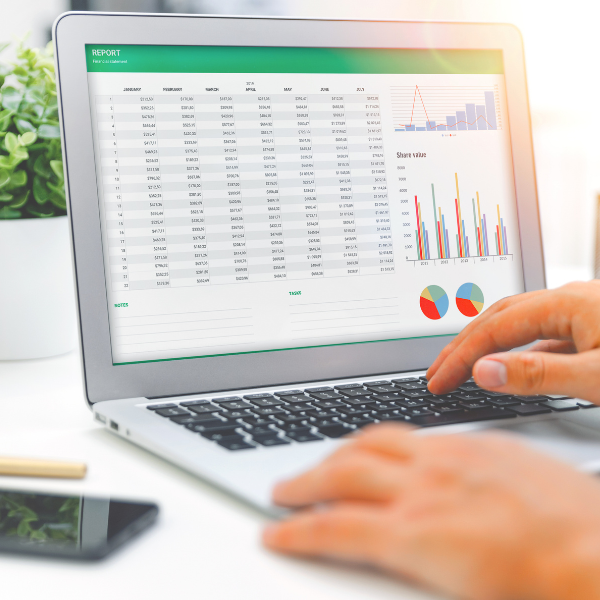
Nobody decides to run their company on spreadsheets.
It just happens. A finance team builds one to track a project. Someone in operations builds another to manage inventory. A sales manager builds one to forecast the quarter. Before long, the business is running on dozens of files, each maintained by a different person, each holding a different version of the truth.
And every month, someone spends two days stitching them together before anyone can see how the business is actually doing.
This is the Excel trap. And it is far more dangerous than most leadership teams want to admit.
Spreadsheets Were Never Meant to Run a Business
Let's be clear about what Excel is good for. It is a powerful tool for analysis, for modeling, for one-time calculations. It was designed for individual tasks, not for enterprise operations.
When organizations start using spreadsheets as their primary operational system, they are using the right tool for the wrong job. And the results show up in predictable ways.
Data gets duplicated. Versions multiply. Formulas break quietly. Someone makes an update in one file that never makes it into the others. The "source of truth" stops being true.
Unfortunately, none of this is immediately visible. The spreadsheets keep working. The numbers keep coming in. The reports keep going out. But underneath, the foundation is shifting. And when something finally breaks, it usually breaks at the worst possible moment.
The Real Price Tag
Finance leaders often talk about the cost of a bad ERP system. The cost of no system does not get enough attention.
Consider what it takes to close the books each month when your financial data lives across multiple spreadsheets maintained by multiple people. The manual reconciliation. The version control chaos. The last-minute scramble to find out why two reports do not match.
In manufacturing and distribution, the problem goes deeper. Inventory decisions made from spreadsheet data that is three days old. Purchasing decisions based on demand forecasts that were manually assembled by someone who is now on leave. Production schedules that do not reflect what is actually on the shop floor.
Every one of these situations has a cost. Some of them are visible, like overtime hours and missed delivery windows. Many of them are invisible, like the margin quietly eroded by purchasing decisions made without full information.
And then there is the risk that nobody budgets for: the single spreadsheet error that ripples through the business before anyone notices.
You Are Not Alone. You Are Also Not Safe.
To be clear, spreadsheet dependency is extremely common in mid-market manufacturing and distribution companies. It's almost a rite of passage. Companies grow past the point where manual tracking works, but have not yet made the investment in systems that can keep up.
The danger is in thinking that because everyone does it, it's acceptable.
The companies your business competes against are not all running on spreadsheets. Some have already made the move to connected, automated systems. Their finance teams close the month in days, not weeks. Their operations leaders see real-time inventory without asking anyone. Their executive teams start Monday mornings with current data, not last week's.
The gap is not just operational. It's strategic. When your competitors can make faster, more accurate decisions than you can, they don't need to be smarter. They just need to be faster.
What Happens When You Break the Pattern
Companies that move off spreadsheet-driven operations and onto a connected ERP platform describe the change in similar terms. Not relief, exactly. More like clarity.
The CFO can see cash flow and budget variance in real time without waiting for a report. The COO can see inventory levels, order status, and production performance from one dashboard. The sales team can quote accurately because they can see what is actually available.
When Microsoft Dynamics 365 Finance connects your financial operations, reporting, and compliance workflows into a single platform, the manual reconciliation work disappears. The version control problem goes away and the question of which spreadsheet has the current number vanishes.
What replaces it is a financial close process that takes days instead of weeks. Forecasting accuracy that improves because the inputs are clean. Audit readiness that no longer requires a panic-driven document retrieval exercise.
And for manufacturing and distribution companies specifically, connecting finance to supply chain and operations data means the decisions made by operations leaders are based on the same numbers the finance team sees. No more operating from two different realities.
The Upgrade Is Less Scary Than Staying Put
Every conversation about moving off spreadsheets eventually gets to the same place. The cost of change feels concrete. The cost of staying feels abstract.
This is exactly backwards.
The cost of staying is real. It is in the hours your finance team spends on reconciliation each month. It's in the inventory decisions that go wrong because the data was stale. It is in the audit that takes three times longer than it should. It is in the forecast that was off by a margin that nobody can quite explain.
The cost of change is also real, but it's a one-time investment with a compounding return. Every month after a successful ERP implementation, the business runs faster, with fewer errors, on better information.
The transition isn't painless. Any honest technology partner will tell you that. But the organizations that have done it do not look back. They look back at the spreadsheet era and wonder what took them so long.
A Question Worth Asking
If your finance team had to close the books today with no warning, how long would it take? How confident would you be in the numbers?
If the honest answer is uncomfortable, that discomfort is telling you something.
The Excel trap is not a data problem. It is a business risk problem. And it gets worse, not better, as the business grows.
Hoalani Group helps manufacturing and distribution companies move off spreadsheet-driven operations onto Microsoft Dynamics 365, built around the way your business actually runs. Not a generic template. A real implementation backed by deep industry expertise.
If you want to see what modern financial operations looks like for a business like yours, request a demo and we'll walk you through getting your data back on track.